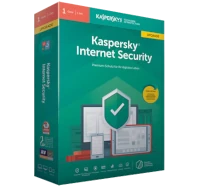
Overview
Kaspersky is one of the longest-running and most recognisable names in consumer cybersecurity. The product is developed by Kaspersky Lab, a research-led security company founded in 1997 by Eugene Kaspersky. Across nearly three decades the engine behind the consumer suite has been applied to enterprise endpoint protection, ICS/SCADA security and threat intelligence — and the consumer brand has consistently appeared at or near the top of independent lab benchmarks year after year.
The consumer line is positioned around three pillars: detection (a malware engine with a long track record of AV-Comparatives Advanced+ certifications and high AV-TEST marks), banking and payment protection (the Safe Money sandboxed browser, anti-phishing and anti-keylogger shields) and performance (a notably light footprint that suits older or low-powered hardware). Higher tiers add a password manager, a bundled VPN, identity-leak alerts and parental controls.
Plans, pricing, regional availability and refund terms are set by Kaspersky and may change over time — current details should always be verified on the provider's website. This review reflects publicly available product information, neutral external sources at the time of writing, and our own use of the apps where access was available. Jurisdictional considerations are addressed neutrally further down — readers should assess these against their region and use case.
Top detectionLong track record of AV-Comparatives Advanced+ certifications
Safe MoneySandboxed protected browser for online banking and payments
Light footprintPerformance-optimised engine well suited to older PCs
Multi-platformWindows, macOS, Android, iOS — up to 10 devices on top tiers
Pros & cons at a glance
Strengths
- Long, consistent track record at the top of independent lab benchmarks (AV-Comparatives, AV-TEST)
- Safe Money sandboxed browser hardens online banking and payment sessions
- Anti-phishing and anti-ransomware shields with behaviour-based detection
- Low system impact — well-suited to older or low-powered hardware
- Up to 10 simultaneous devices across Windows, macOS, Android and iOS on top tiers
- Password manager, VPN bundle and identity-leak alerts on higher tiers
- Mature, polished apps and well-documented help resources
Considerations
- Jurisdictional considerations should be assessed by the reader for their region and use case
- Not currently available for new purchase or update in the United States following the 2024 Commerce Department determination
- Bundled VPN data and feature scope is limited compared with standalone VPNs on lower tiers
- Renewal pricing tends to be higher than the introductory rate — set a calendar reminder
- Some advanced features (parental controls, identity protection) gated behind upper tiers
Detection & lab-test track record
Detection performance is the area in which Kaspersky has earned its strongest reputation. For more than two decades the engine has been a fixture in the upper band of independent lab benchmarks — AV-Comparatives Advanced+, the highest tier in that lab's protection certifications, has been awarded repeatedly across yearly cycles, and AV-TEST has consistently rated the product highly across protection, performance and usability categories.
The detection stack combines several layers: signature-based scanning for known malware, heuristic and behaviour analysis for unknown samples, cloud-assisted reputation checks via the Kaspersky Security Network, and a dedicated System Watcher module that monitors process behaviour and can roll back ransomware-induced changes when malicious encryption is detected. Anti-phishing checks operate at the URL level via browser extensions, supplemented by domain-reputation data from the cloud network.
For real-world relevance, lab-test scores are among the most useful indicators consumers have — they are produced under controlled conditions against large, current malware samples that no individual reviewer can match. Readers who weight detection performance highly in their buying decision should consult the most recent AV-Comparatives and AV-TEST consumer reports directly; both publish full methodology and per-product results.
Beyond classical malware, Kaspersky's anti-ransomware behavioural shield is one of the more mature implementations on the market. The combination of System Watcher's rollback capability with file-protection rules around user-document folders provides a practical second line of defence against the small percentage of ransomware that slips past first-line detection.
Privacy, jurisdiction & data processing
Privacy and jurisdictional considerations are an unavoidable part of a Kaspersky review and we address them neutrally, as factual context, without taking political positions. Readers should weigh these factors against their own threat model and regional regulatory environment.
Corporate origins. Kaspersky Lab was founded in Moscow, Russia, in 1997, and Russia remained the operational headquarters for most of the company's history. Eugene Kaspersky remains the public face of the company.
Restructuring & Transparency Center. Beginning in 2017–2018 Kaspersky undertook a multi-year Global Transparency Initiative. As part of that programme the company moved data processing for European, North American and several other regional customer groups to a Transparency Center in Zurich, Switzerland, where source-code review by independent third parties is also offered. Additional Transparency Centers have been opened in other regions. The objective stated by Kaspersky is to allow regulators, partners and government stakeholders to inspect the codebase and threat-data flows directly.
U.S. regulatory action. In 2024 the U.S. Commerce Department issued a determination prohibiting new sales and software updates of Kaspersky products in the United States, citing national-security considerations. The action did not allege any specific incident of misuse but was framed as a precautionary jurisdictional measure. Outside the United States, Kaspersky continues to operate normally; in many European markets it remains a widely sold consumer product. Users should assess current jurisdictional considerations for their region and use case before purchase.
Encryption & data handling. Telemetry and threat-sample uploads to the Kaspersky Security Network are configurable in the product — users can opt out of certain non-essential data transmissions in settings. The privacy policy and Transparency Center documentation describe what categories of data are collected, where they are processed, and for how long they are retained. As with every cloud-assisted antivirus, some metadata transmission is intrinsic to the cloud-detection model.
Features & security tooling
According to Kaspersky's product documentation, the consumer suite includes:
- Real-time antivirus with signature, heuristic and cloud-assisted detection
- Anti-ransomware shield via System Watcher with rollback of malicious changes
- Anti-phishing URL filter for browsers and email clients
- Safe Money protected sandboxed browser for banking and online payments
- Webcam and microphone protection — alerts on application access attempts
- Anti-tracking browser extension for ad and tracker blocking
- Password manager on higher tiers, with secure autofill across devices
- Bundled VPN on premium tiers (data limits apply on standard plans)
- Identity-leak alerts for known credential breaches
- Parental controls with content filtering and screen-time management
- Multi-platform coverage — Windows, macOS, Android, iOS
- Up to 10 simultaneous devices on top tiers
- 30-day money-back guarantee per the provider's terms
Apps & usability
Kaspersky's apps follow a mature, settled design language. The Windows app presents a clear dashboard with status indicators (green/yellow/red) for the major protection components and one-click access to common actions (scan now, run Safe Money, update databases). Power users can drill into granular component settings, exclusions and scheduled-task configuration.
The macOS app mirrors the core functionality with platform-appropriate UI conventions. Android covers anti-malware scanning, anti-phishing for browsers, anti-theft and call/SMS filtering. iOS coverage is — as with every iOS antivirus — naturally narrower than Android due to platform restrictions, focusing on web protection, identity alerts and password-manager features.
Onboarding is straightforward: account creation, app install and initial database update typically complete in a few minutes. Default settings are sensible — real-time protection, anti-phishing and the behavioural shield are all enabled out of the box, so non-technical users get a strong baseline without configuration.
Pricing & plans
Kaspersky sells across tiered consumer plans — typically a Standard (core antivirus), Plus (adds password manager and basic VPN) and Premium tier (adds identity protection and full-feature extras). Plan length is the dominant pricing lever: 1- and 2-year plans are most common, with the per-month cost reducing as plan length increases.
Average plan pricing in the EU sits around the €3.99 per month band for the standard tier on long-term plans, though promotional pricing varies by region and time of year. As with most premium antivirus, the introductory price applies only to the first term — renewal is billed at Kaspersky's standard rate, which is typically materially higher. Set a calendar reminder before your term expires if you want to renegotiate or churn.
The 30-day money-back guarantee allows risk-free testing of any plan length. Payment is accepted via the standard card and digital-wallet methods on the provider's checkout page.
At-a-glance specifications
OperatorKaspersky Lab
Founded1997
Data processingZurich Transparency Center (EU/NA users)
Detection engineSignature + heuristic + cloud + behavioural
Lab certificationsAV-Comparatives Advanced+, AV-TEST
Banking protectionSafe Money sandboxed browser
RansomwareSystem Watcher with rollback
System impactLow (lab-benchmarked)
PlatformsWindows, macOS, Android, iOS
Simultaneous devicesUp to 10 (top tier)
Refund window30 days
U.S. availabilityRestricted following 2024 Commerce determination
Customer support
Kaspersky offers a multi-channel support stack: an extensive online knowledge base with setup, configuration and troubleshooting articles, an email/ticket system, telephone support in major regions, and an active community forum. Live chat is available in many regions, with response times typically reasonable during business hours.
Documentation is well-organised by product, version and platform — a benefit of Kaspersky's nearly three decades in the market. Power users will appreciate the depth of technical articles covering exclusions, integration with corporate environments and edge-case troubleshooting. Forum-based community help is generally a fast route for niche configurations.
Refund window & cancellation
Kaspersky advertises a 30-day money-back guarantee for new subscriptions. The exact eligibility conditions — minimum subscription duration, eligible payment methods (App Store / Play Store purchases follow platform refund policies), and cancellation procedure — are documented in Kaspersky's terms of service. Read these terms before purchase to understand the process.
Cancellation can be initiated from the My Kaspersky dashboard or via support. Auto-renewal can be disabled at any time without affecting the active subscription term — meaning users keep protection until the end of the paid period, then simply lapse without being re-billed.
Who Kaspersky is for
- Users who weight independent lab-test detection performance highly in their buying decision
- Users who do significant online banking and payment activity and value the Safe Money sandboxed browser
- Users on older or lower-powered hardware where system impact matters
- Households needing up to 10 simultaneous devices across mixed platforms
- Users in regions where Kaspersky remains commercially available and aligned with their jurisdictional preferences
Users in the United States should consult the current regulatory status before purchase, given the 2024 Commerce Department determination — alternative editorial picks that suit U.S. buyers are listed in our comparison. Users with strong jurisdictional preferences for EU- or U.S.-based vendors may prefer Bitdefender (Romania) or McAfee (U.S.) respectively.
Editorial verdict
Kaspersky remains, on the technical merits, one of the strongest antivirus engines on the consumer market. The combination of a long track record of top-tier results in independent lab benchmarks, the mature Safe Money banking sandbox, the System Watcher behavioural anti-ransomware layer and a notably light system footprint makes it a credible choice — particularly for users on older hardware or with banking-heavy workflows.
The dominant non-technical considerations are jurisdictional. Kaspersky has invested significantly in its Transparency Initiative and Zurich-based data processing, which materially reduces the practical concerns for European and many other regional buyers. U.S. buyers should consult the current regulatory status before purchase. The 30-day refund window provides comfortable risk-free evaluation in regions where Kaspersky remains commercially available.
Frequently asked questions
Who makes Kaspersky antivirus?
Kaspersky antivirus is developed by Kaspersky Lab, a cybersecurity company founded in 1997 by Eugene Kaspersky. The company has restructured operations over recent years and operates a Transparency Center in Zurich, Switzerland, where source-code review and data processing for European customers takes place.
How does Kaspersky perform in independent lab tests?
Kaspersky has consistently earned top-tier results in independent lab benchmarks for over two decades, including AV-Comparatives Advanced+ certifications and high marks from AV-TEST. Current scores and methodology details are published on the AV-Comparatives and AV-TEST websites.
What is Safe Money?
Safe Money is Kaspersky's protected-browser feature for online banking, payments and shopping. When you open a banking site, the browser is launched in a hardened, sandboxed environment that protects against keyloggers, screen-grabbers and man-in-the-browser malware.
How many devices can a Kaspersky subscription cover?
Top-tier Kaspersky plans advertise simultaneous coverage for up to 10 devices across Windows, macOS, Android and iOS. Lower tiers cover fewer devices — verify the device limit on the provider's pricing page before purchase.
Where is Kaspersky headquartered today?
Kaspersky Lab was historically headquartered in Moscow, Russia. The company has restructured its data infrastructure and now processes data for European, North American and other regional customers through its Transparency Center in Zurich, Switzerland. Users should assess current jurisdictional considerations for their region and use case.
Is Kaspersky available in the United States?
In 2024, the U.S. Commerce Department issued a determination prohibiting new sales and software updates for Kaspersky products in the United States, citing national-security considerations. Users in the U.S. should review the current regulatory status and consider this before purchase. Outside the U.S., Kaspersky continues to operate normally.
Does Kaspersky slow down older PCs?
Kaspersky has historically been recognised in lab benchmarks for low system impact, with optimisations that make it suitable for older hardware. Idle and on-access scanning impact is generally low, making it a reasonable choice for ageing laptops and budget PCs.
Can I get a refund from Kaspersky?
Kaspersky advertises a 30-day money-back guarantee for new subscriptions. Eligibility conditions and the cancellation procedure are documented in Kaspersky's terms of service — review the current refund policy on the provider's website before purchase.